
Page 118
The Willner Window Product Reference Catalog, Autumn, 2013
since 1911
• Willner Chemists •
the nutritional supplement professionals
Bioforce
cury and PCBs. Women have been warned
by the FDA against eating too much fish
when pregnant. This is due primarily to con-
cerns over methylmercury levels, which
could affect brain development in the devel-
oping fetus. To complicate matters, however,
and make the situation more confusing, the
National Institutes of Health published a
study in 2007 that stated that pregnant
women “who limit their fish consumption to
recommended government levels may be
doing their unborn babies more harm than
good. Researchers found that women who
ate less than 12 ounces of fish or other
seafood per week while pregnant were more
likely to have children with verbal and other
developmental delays than women who ate
more than 12 ounces each week.”
(Dyerberg, J. M.D., DMSc) & Passwater, PhD.
The Missing Wellness Factors--EPA and
DHA.)
Fish oil supplements offer a perfect solution
to this problem. High quality omega-3 oils
supplements, these days, are extracted and
purified through a sophisticated distillation
process that removes these contaminants.
This results in a highly concentrated EPA-
DHA rich fish oil supplement that is free of
mercury, PCBs and other undesirable com-
pounds--an excellent example of when a
supplement is better than the food from
which it was derived.
Another problem with food involves pro-
cessing and contaminants. Quite often, the
nutrient content of foods is significantly
depleted during processing. The nutrient
density is further reduced by the addition of
flavoring, processing, and the use of stabiliz-
ing agents. Too many foods are no longer
what they seem. Instead of drinking fruit
juice, we drink concentrate or flavoring in a
solution of sugar and coloring. Instead of
whole-fruit jam, we use jelly, which is mostly
sugar. Instead of cheese, we use cheese
spread.
A careful reading of the ingredient listing
on food labels reveals an increasing tendency
to mislead the consumer about the growing
presence of not-so-healthy components. Use
of ingredient names such as "dehydrated
grape juice" instead of "sugar," for example, is
an attempt to mislead the consumer into
thinking there is less sugar in the product.
Concern over the increased contamination
of foods with pesticide residues, antibiotics,
and hormones has resulted in a rapid growth
of so-called organic foods.
Whatever the reason, there seems to be an
increasing problem with food allergies. For
many people, eating a balanced diet has
become very difficult because of their inabili-
ty to tolerate certain foods. The same can be
said for people who are frequently on weight
loss diets. When reducing caloric intake, the
difficulty of maintaining adequate nutrient
levels is magnified.
Theoretically Yes, But Practically? No!
Eating right remains a noble goal. But prob-
lems with our food supply, lifestyle, and
advertising pressures, as well as with reduced
intake due to weight loss diets and allergies,
make this more difficult than it might seem at
first glance.
It should also be pointed out that we con-
sume fewer calories today than our ancestors
did and that our needs for protective nutri-
ents, at the same time, may be greater. We
are exposed today to levels of pollution and
radiation that place additional burdens on
our body's defense systems. We live longer
than our ancestors did. Maximizing bone
density to prevent osteoporosis may have
been less of a concern when the average
woman lived only to 50 rather than to 80. To
rely only on the myth of a balanced diet to
provide us with optimal levels of protective
nutrients is impractical given the realities of
our environment at this time.
The elderly, as a group, are now consid-
ered to be at high nutritional risk. Some have
actually gone so far as to propose that what
we consider normal signs of aging may actu-
ally instead be symptoms of inadequate
nutrition.
We have actually reached the point now
where even the most conservative nutritionist
is acknowledging that there are times when
supplements are necessary, even to provide
the recommended daily intake of essential
nutrients. The National Academy of Sciences,
Institute of Medicine, Food and Nutrition
Board, has recently increased the recom-
mended daily intake level of vitamin C, for
example, to 150 percent of its previous level-
90 milligrams daily rather than the previous
recommendation of 60 milligrams.
And the recommended intake of calcium
has been raised as well, with an admission by
the agency that it may be appropriate, or
necessary, to use calcium supplements to
achieve that level. An acknowledgment of
the necessity for using a supplement to satisfy
part of the daily nutrient requirement would
have been unheard of in years past.
The above is an excerpt from the revised and
updated edition of The Best Supplements For
Your Health, by Don Goldberg RPh and Arnie
Gitomer RPh.
The updating of this popular book will be an
ongoing process, and we hope to make it
available on www.willner.com.
Send your suggestions and questions to
dgoldberg@willner.com or
www.dongoldberg.com
Now available, in digital format,
revised and updated, on the Willner
Chemists website
www.willner.com
in the reference library section.
. . . continued from page 116
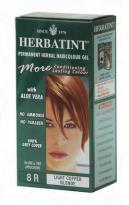
PARIS—60 Million Consumers, the French consumer testing organization, tested 15 well-known mass market and three nat-
ural hair dyes currently sold in Europe and the United States for performance and safety. Of the 18 tested, Herbatint was
the only dye with an acceptable safety rating, in addition to being named fully acceptable for long-lasting natural color.
Each product was evaluated for: potential irritation, sensitization, mutagenic risks, and carcinogen and reproductive
toxins using the standards of the Scientifc Committee on Consumer Safety (CSSC) of the European Union (EU). Based
on toxicological profles, Herbatint was the only hair dye judged frst choice because it uses
very few potentially sensitizing or toxic substances as well as providing very good color.
Best Choice hair color for limited risks
This hair dye was noted for the very naturalness of its color. The color and its long lastingness
were judged fully acceptable. Moreover, it distinguishes itself from all its competitors, by its
safer formulation based on the toxicological testing. It uses very few substances that can cause
sensitivity or be toxic.
60 Million Consumers Names Herbatint
Long-Lasting, Safest Hair Dye
35% OFF ALL HERBATINT COLORS